Low-E
We recommend Low-E glass on all windows for improved year-round energy efficiency, helping reduce both heating and cooling costs across all sides of the home. Low-E is a nearly invisible coating applied to the interior glass surface that reflects long-wave heat energy, keeping heat outside in the summer and retaining it indoors during the winter.
If you’re looking to reduce direct solar heat gain, a soft-coat Low-E option provides stronger solar control. However, it will also reduce passive solar heat in winter. Because it limits heat absorption, the exterior glass can sometimes be cooler, and light condensation may appear on damp summer mornings. This is normal and clears as conditions change.
Low-E glass also helps reduce UV transmission, protecting interior furnishings, fabrics, and flooring from fading.
In addition, we fill the sealed air space with argon gas, which is denser than air and improves insulation performance, helping reduce heat loss and minimize condensation in very cold conditions.
Our Low-E Glass Options
Glass Name
Description
Best For
Triple Prairie 62/27 Sunstop
VT: 58% | SHGC: 0.24 | U: 0.181
Blocks summer heat while keeping winter comfort high.
Pros
- Strong solar control
- Very good energy efficiency
- Cuts glare
Cons
- Darker appearance
- Gives up a lot of winter solar heat
- West-facing windows
- Large south-facing glass walls
- Lakefront homes
- Homes with strong AC use
Triple Prairie 70 Sunblock
VT: 63% | SHGC: 0.32 | U: 0.182
A great balance of comfort, daylight and solar protection.
Pros
- Good daylight
- Strong solar control
- Excellent efficiency
Cons
- Less passive winter heating
- Most urban Saskatchewan homes
- South and west exposures
- Homes that overheat in summer
- Customers wanting comfort over solar gain
Triple Prairie 70 Sunguard
A balanced low-E package that delivers strong energy performance while helping keep homes cooler in summer.
Pros
- Good natural daylight
- Excellent energy efficiency
- Better solar control than 80/71
- Less overheating than high-SHGC glass
Cons
- Doesn’t capture as much winter solar heat as 80/71
- Not quite as thermally efficient as Premium or Premium Plus
- South-facing windows
- West-facing windows
- Lake homes
- Homes with air conditioning
Triple Prairie 80/71
VT: 73% | SHGC: 0.64 | U: 0.186
An all-around balanced glass made for Saskatchewan seasons.
Pros
- Bright glass
- Excellent winter solar gain
- Strong efficiency
Cons
- Can allow significant summer heat gain on west exposures
- South-facing windows
- Rural prairie homes
- Customers wanting lower heating bills
- Homes without significant overheating concerns
Triple Prairie Premium
VT: 61% | SHGC: 0.32 | U: 0.129
Premium efficiency that keeps your home warmer and your energy bills lower.
Pros
- Exceptional insulation
- Very low heat loss
- Excellent comfort near windows
Cons
- Reduced passive solar gain
- Slightly darker
- Net-zero and high-performance homes
- New construction
- Homes exposed to prairie winds
- Customers focused on energy savings
- Large window areas
Triple Prairie Premium Plus
VT: 48% | SHGC: 0.21 | U: 0.119
Maximum comfort and efficiency in every season.
Pros
- Best thermal performance
- Lowest heat loss
- Best summer heat control
Cons
- Darkest glass package
- Lowest solar gain
- Luxury homes
- Large south/west glass walls
- Lakefront homes
- Net-zero construction
- Customers wanting the absolute highest efficiency
Glass Name
Description
Best For
Low‑E vs Tinted & Reflective Glass
A simple guide for homeowners in high-heat areas
Many customers assume that the best way to reduce heat in a home is to choose tinted or reflective glass. In most residential applications (especially in climates like Southern Saskatchewan) this is not always the case.
Low‑E Glass
Low-E (low emissivity) coatings are a modern, energy-efficient solution built into sealed glass units to reduce heat transfer while maintaining visible light. They come in two types: soft coat (sputtered), which offers higher performance but is more delicate, and hard coat (pyrolytic), which is more durable but slightly less insulating.
What it does well:
– Reduces heat coming into the home in summer
– Helps keep heat inside during winter
– Maintains high natural light levels
– Works all day, every day, without changing appearance dramatically
Key takeaway:
Low‑E is designed to balance comfort year-round, not just block sunlight.
Tinted Glass
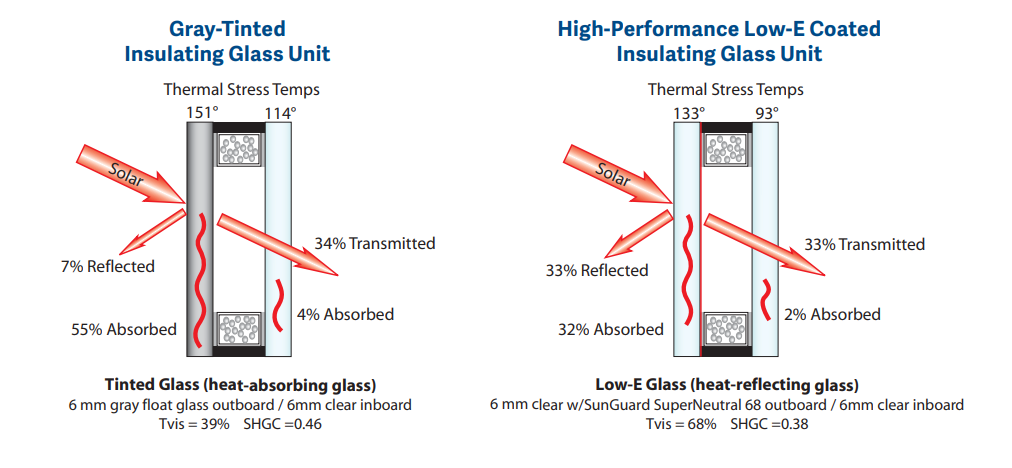
Tinted glass absorbs solar energy to reduce heat gain. Our tinted glass units are available in both grey and bronze.
What it does well:
– Reduces brightness and glare
– Lowers some solar heat gain
Trade-offs:
– Makes interiors noticeably darker
– Reduces natural daylight year-round
– Heat is absorbed into the glass itself (can still transfer inward)
Key takeaway:
Tint reduces light as much as heat, so rooms often feel darker and less open.
Reflective Glass
Reflective glass uses a metallic coating to bounce sunlight away from the building. Our reflective glass units are available in both grey and bronze.
What it does well:
– Reduces solar heat gain in direct sunlight
– Creates a mirrored exterior look during daytime
Trade-offs:
– Less natural light indoors
– Can feel more enclosed
– At night, with interior lights on and no sunlight outside, becomes transparent
Key takeaway:
Its appearance shifts with lighting and it often reduces indoor openness.
Why Low‑E Is Usually Enough (Even in Hot Homes)
For most homes in Saskatchewan, even with large south-facing windows, lakefront exposure, orwest-facing sunset heat, high-performance Low‑E glass typically provides:
– strong summer heat reduction
– excellent winter insulation
– full natural daylight
– clear, non-mirrored appearance
Bottom Line
In most homes, especially modern builds, high-performance Low‑E glass provides the best balance of comfort, brightness, and energy efficiency without making the home darker or altering exterior appearance. Tinted and reflective options are specialized aesthetic solutions, often not necessary for most residential applications, even in high-heat environments.
Obscure Glass
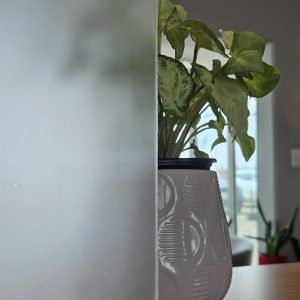
Obscured glass is designed to let in natural light while reducing visibility, making it an ideal choice for spaces where privacy matters. It’s a great alternative to blinds or curtains, offering a clean, low-maintenance look that works especially well in bathrooms, entryways, and other private areas where you want light without exposure.
Rain
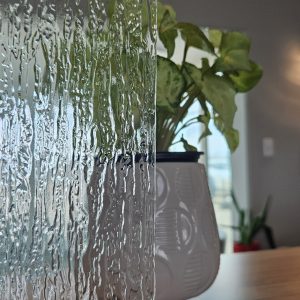
Rain glass features a flowing, vertical texture that resembles water running down a windowpane. The pattern is created by rolling the glass during manufacturing, providing a stylish look that allows natural light in while offering moderate privacy.
Pinhead
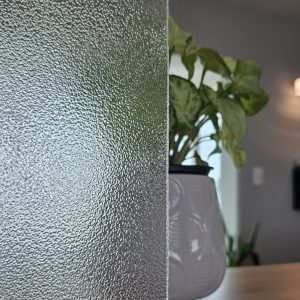
Pinhead glass has a finely textured surface made up of small raised dots that create a subtle frosted appearance. This texture is formed during the manufacturing process and provides increased privacy while still allowing light to pass through clearly.
Matelux
Matelux is an acid-etched glass that combines a soft satin finish with a neutral, translucent appearance. It gently filters natural light, softens visual contours, and provides the highest level of obscurity and privacy, ideal for discreet, elegant spaces.
Grills
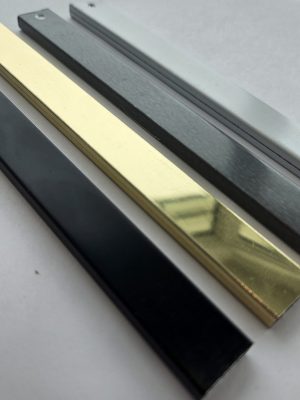
We have a variety of colors available in both 3/8 and 5/8 widths. Colors available are white, pewter, black, and polished brass. Visit our showroom for details. Simulated Divided Lites are also available in white or painted to match windows.